The AI-Ready Organization - Architecture

Steven Carnegie
CIO at Dext Capital
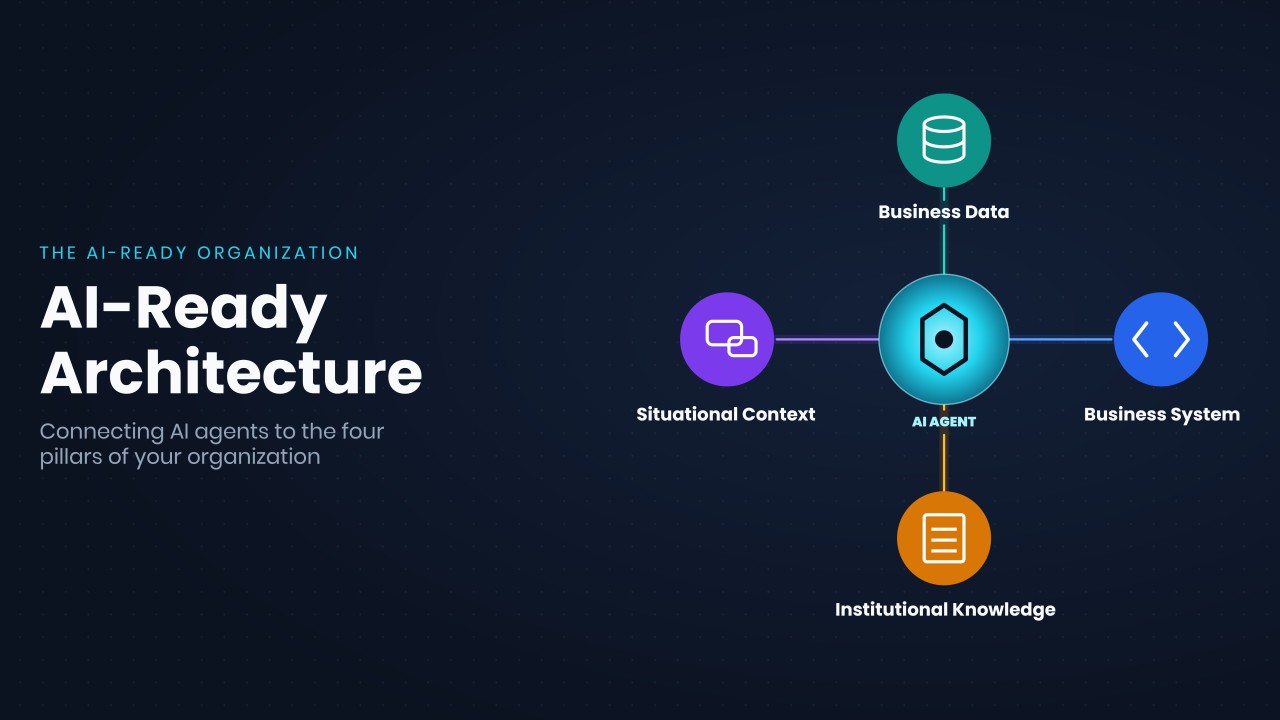
From a CIO's perspective, the rapid advancement in AI agents over the last year has reached enterprise grade scale and potential. Models have emerged that approach equality with human skills in many areas. Also, new tools like Claude Code and Claude Cowork are available where you state a goal and through multiple interactions with the model, it creates a plan, executes that plan, and confirms results. Importantly, these new tools interact with more than just the model through technologies like MCP and being a native app on your desktop, so that they are able to actually do work on your behalf rather than just respond to prompts.
In the last two months, I'm seeing the adoption of these types of tools spread rapidly across my organization as individuals, departments, and leaders find ways to make use of this approach. But without being architecturally ready for this transformation, the results will be stymied.
This challenge has spurred me to develop a vision at Dext of The AI-Ready Organization. Part of that is having the architecture needed to put these new tools to work in a meaningful sense. What must change internally about our IT infrastructure to effectively leverage this new set of tools and techniques?
The key insight for me was that AI agents need access to the same types of information that people do if they're going to do similar work.
There are four architectural information domains that agents need within your organization to do their jobs effectively as shown in the diagram below.
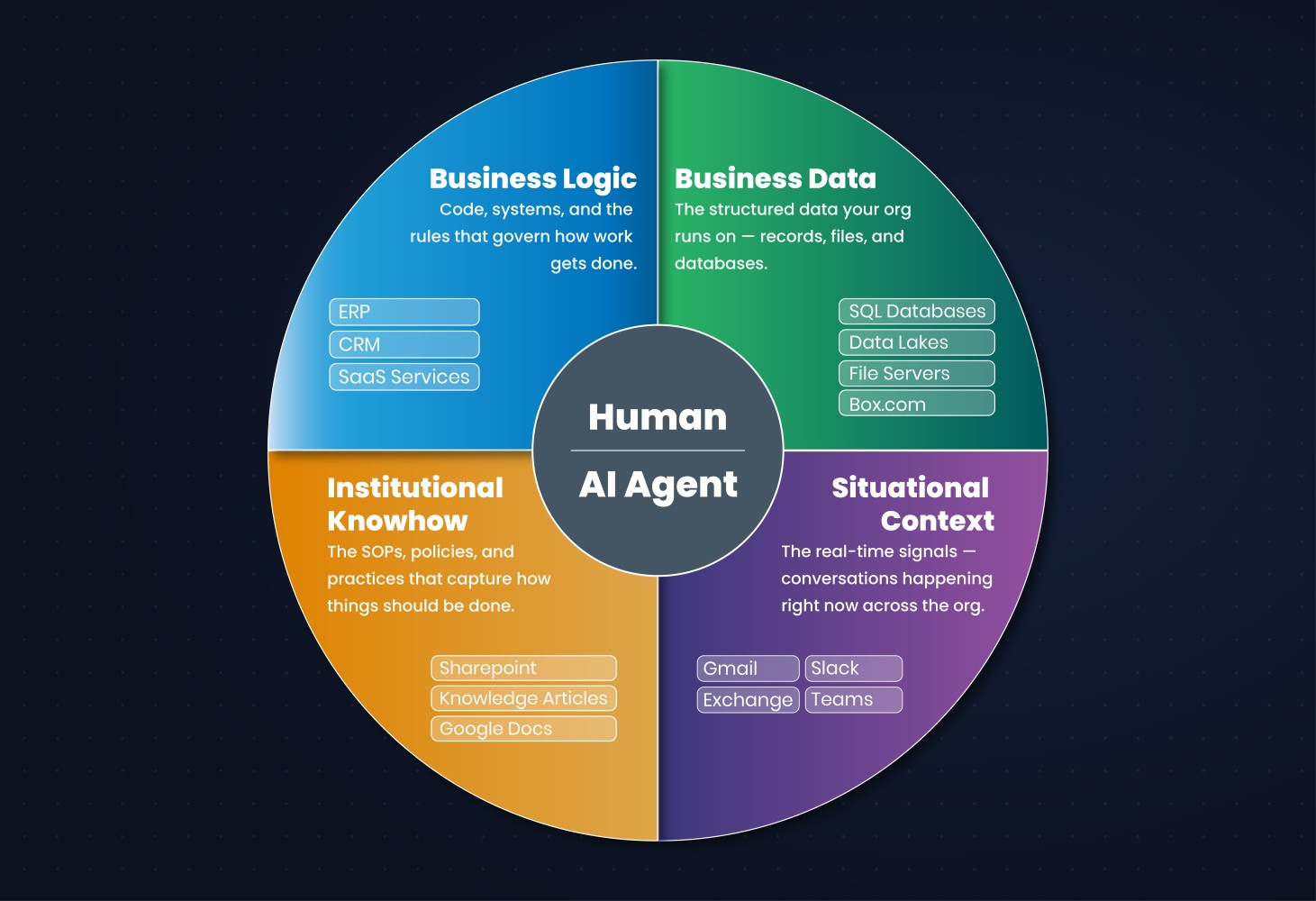
Business Data
Most obvious: agents need access to your company's data: structured data in databases and enterprise applications, as well as less structured data in file stores. In our case, we need to make sure that AI agents can access our CRM data, our lease and loan accounting data, and all of our electronic documents. Access can be granted through APIs, MCP servers, or mapped drives.
Institutional Knowledge
Less obvious but perhaps most importantly, agents need access to your company's knowledge as it's represented in policies, standard operating procedures, manuals, and documentation. What would you give to a new employee to help them understand your company's special sauce, your company's way of doing things that's different from your competitors? Our AI agents need to know this to make correct decisions. It's best if you can give the agent access to where this is stored and updated, but if it's scattered all over the place, simply copy it into one big folder and point the agent at that.
Situational Context
Least obvious but also critical: AI agents need access to the current conversational context. This was the "a-ha" moment for me. Agents need access to the conversations we're having about any particular job, task, project, or initiative. This means the agent needs to be able to find and use the most recent emails, SMS, and real-time messages around a related topic. Obviously, you must figure out the security, but this information is critical to allow your agent to perform at a human level in an enterprise-level context. For example, if there's an email conversation about making an exception to a policy because this is a major client or because this deal is like your normal deal, except for the following three things, AI needs to know that, just like a human needs to know that, to deliver the best value and correct results. Unfortunately, these communication applications are based around delivering this information through human-focused UIs competing for human attention, so the data can be tough to access. There are usually MCP clients to connect to these data sources, but you have to manage the security and relevancy. Think deeply about this because if you get this right, the agents will keep pace with the speed of business change.
Business Systems
And the fourth aspect is that the agents need the ability to take action by connecting them to your business logic. So, an interface to update your CRM system, update your ERP system, send an email. These are fundamental connections that allow your agents to deliver value as opposed to just prompted results. If there are so many security concerns or change management constraints that your agents can't connect to take action, you'll never see the full value of this approach.
Final Thoughts
Of course, to be a fully AI-ready organization, you will need additional work beyond the architectural: policies, security & safeguards, investment in human training, cost management, feedback and monitoring. This article has focused solely on the architectural aspect.
Perhaps your organization needs a different approach, but I wanted to share mine to spur thoughts about the fundamental challenge of making knowledge available to agents so that they can do their best work to assist us.